SUSTAINABILITY REPORT
S1 Own workforce
Strategy and management of material impacts, risks and opportunities
Material impacts, risks and opportunities related to the own workforce
ESRS 2, SBM-3 Material impacts, risks and opportunities and their interaction with strategy and business model
AddLife’s subsidiaries are located in a large number of European countries and mainly consist of direct employees, including sales representatives, product specialists, marketing employees, customer support, training- and service employees, while warehouse and production employees make up a smaller share of the workforce. As part of the double materiality analysis, AddLife has identified both material impacts and risks related to the Group’s employees as a whole. These impacts and risks are assessed to affect all employees in general and are not considered to be concentrated to specific groups, and no need for a more detailed analysis of individual employee groups has therefore been identified.
| MATERIAL IMPACT, RISK OR OPPORTUNITY | ||
| Working conditions | Impact (actual, negative) | O |
| Equal treatment and opportunities for all | Impact (potential, negative) | O |
| Impact (potential, positive) | O | |
| Working conditions & Equal treatment and opportunities for all | Risk | O |
| Upstream (U), Own operation (O), Downstream (D) | ||
AddLife’s employees play a crucial role in realising the Group’s vision of improving people’s lives by being a leading and value‑creating partner in Life Science. The Group’s business model and strategy are based on experienced employees with highly specialised expertise, whose commitment, customer focus and industry knowledge are central to driving profitable growth and developing competitive offerings for healthcare and research. The Group’s ability to retain and attract key employees has therefore been identified as a material risk.
In order to retain and attract new employees, competitive terms and conditions, competence development and the working environment have been identified as key factors. AddLife’s strategic sustainability work therefore focuses on promoting a diverse, inclusive and safe workplace and on preventing discrimination in all its forms, with a focus on preventing and managing both recurring patterns and individual cases of negative impact within the organisation. In addition, AddLife invests time and resources in the training programmes offered to all employees in the Group via AddLife Academy. These training programmes have the potential to increase employees’ job satisfaction and contribute to personal development by strengthening employees’ skills, career development, networking opportunities and the exchange of experience within the Group.
During the reporting period, through the Group’s employee survey, AddLife identified perceived work‑related stress as a result of a working environment with a high work pace. This negative impact is assessed as widespread rather than linked to individual incidents.
Policies related to the own workforce
S1-1 Policies related to own workforce
AddLife’s Code of Conduct is the Group’s overarching governing document for responsible, sustainable and ethical business conduct and serves as practical guidance on how AddLife assumes responsibility in day‑to‑day decisions and actions, based on the Group’s vision and core values: simplicity, responsibility, commitment and innovation. The Code of Conduct is founded on commitments under the UN Universal Declaration of Human Rights, the OECD Guidelines for Multinational Enterprises and the ILO core conventions. During the reporting period, AddLife updated the Code of Conduct to clarify the Group’s commitments regarding human rights and labour rights in the value chain and to expand the Group’s commitments in relation to environmental matters. The updates were adopted by the Board of Directors after the end of the financial year.
With regard to its own workforce the Code of Conduct sets out commitments relating to a safe and healthy working environment. The Code of Conduct supports AddLife’s occupational health and safety management in accordance with applicable health and safety legislation, including procedures to prevent workplace accidents and work‑related ill health in each subsidiary. Incidents are managed through local health and safety management systems. Furthermore, the Code of Conduct includes commitments to prevent discrimination and harassment and to promote equal opportunities and diversity. It states that all employees must have equal opportunities regardless of gender, gender identity, gender expression, age, sexual orientation, disability, ethnic origin, religion or other belief. In addition, AddLife must work actively to identify and close any pay gaps for equal work, increase gender equality and broaden diversity in recruitment.
The subsidiaries are responsible for implementing the group‑wide policies locally, and employees can report suspected breaches, such as discrimination and harassment, through local reporting channels or via the Group’s whistleblowing channel. Through recurring training, communication and the annual Group‑wide employee survey, AddLife works to promote an inclusive culture, engage employees in matters relating to their working conditions and counter discrimination.
For further information on AddLife’s Code of Conduct, its content and responsibility for implementation, see “Code of Conduct and group‑wide policies” in chapter G1 Business conduct. For more information on the mechanism used to monitor compliance with the policies, see “Business conduct principles and corporate culture” in section G1 Business conduct.
Processes for dialogue with the own workforce
S1-2 Processes for engaging with own workforce and workers’ representatives about impacts
In AddLife’s decentralised business model, the dialogue with employees takes place primarily at local level within each subsidiary. The work is structured in different ways depending on the geographical market and the size of the subsidiary, but always ensures compliance with local laws and regulations. Dialogue takes place on an ongoing basis through individual performance and development reviews, training, daily meetings, social events and other forms of interaction.
In addition to local communication channels, AddLife brings together employees from across the Group through its network and various Group-wide initiatives. All new employees attend the Group-wide course on Vision and Corporate Philosophy, where the Group’s core values and Code of Conduct are introduced. Employees then meet through, for example, training programmes within AddLife Academy, conferences and cross‑Group projects. All of these occasions provide insights that are used both as a basis for action plans and to proactively design initiatives and ways of working that balance business considerations with the working environment and working conditions.
AddLife’s annual employee survey is an important tool for evaluating employees’ experiences and views. The employee survey covers all employees in the Group, ensures anonymity and is followed up at subsidiary level. To provide additional insight, the results are analysed based on, among other things, gender, length of employment, age and geographical market. The insights form the basis for local action plans that are decided and followed up by each management team in dialogue with employees and the subsidiaries’ boards of directors. Particular attention is paid in the analysis to responses relating to perceived discrimination and harassment, including underlying causes and whether certain groups are considered to be at particularly high risk of being affected. Developments are monitored over time to assess whether the actions taken have also led to actual improvements. Group Management has ultimate responsibility for the employee survey, while the management of each subsidiary ensures that employees are given the opportunity to participate, that the results are communicated to employees and that the action plans are implemented.
Handling of complaints and remediation relating to the own workforce
S1-3 Processes to remediate negative impacts and channels for own workforce to raise concerns
AddLife’s employees have several different channels through which they can raise concerns or report incidents, depending on the type and severity of the matter. As a first step, employees are encouraged to contact their immediate manager, the HR function or another appropriate persons within the company for issues related to personal health, the working environment or dissatisfaction in the workplace. Cases are handled on a case‑by‑case basis, and the process differs between subsidiaries, geographical markets and national legislation in order to ensure compliance with local rules on occupational health and safety, data protection and investigation requirements. Preventive and corrective actions vary between the Group’s subsidiaries and are, for example, carried out via the HR function, occupational health services or with the support of ISO 45001. In cases of suspected irregularities, breaches or criminal offences, employees, as well as external parties, can report the matter via the Group’s whistleblowing channel. Whistleblowing cases are always handled in accordance with the formal process described in more detail under “Whistleblowing channel” in chapter G1 Business conduct.
The Group’s Code of Conduct is intended to ensure that concerns can be raised or issues reported without fear of retaliation, by ensuring that all matters are handled promptly, fairly and confidentially and by offering options for anonymous reporting. Awareness and knowledge of the Group’s Code of Conduct, communication channels and whistleblowing channel are communicated and monitored through training, the annual Group‑wide employee survey and information available on the Group’s website. AddLife strives to ensure effective identification and handling of cases involving negative impacts and will continue to work actively to ensure appropriate tracking and follow‑up of such cases across the Group.
Actions and resources related to the own workforce
S1-4 Taking action on material impacts on own workforce, and approaches to managing material risks and pursuing material opportunities related to own workforce, and effectiveness of those actions
The subsidiaries identify, implement and follow up actions to strengthen and improve working conditions, competence development and the working environment, based on local dialogue with employees and the results of the Group‑wide employee survey. In addition to the subsidiaries’ local actions, AddLife runs four Group‑wide initiatives to address the Group’s material impacts and risks related to its own workforce and to support the implementation of AddLife’s Code of Conduct. These initiatives include AddLife Academy, AddTalent, the HR network and AddLife’s strategic management of employee well‑being. The Group‑wide initiatives are jointly driven by those responsible for AddLife Academy and the Group’s Head of Sustainability, while local responsibility rests with each subsidiary. The design of the initiatives is informed by, and followed up through, local dialogue and the Group‑wide employee survey. For more information, see the section “Processes for dialogue with the own workforce” above.
AddLife Academy
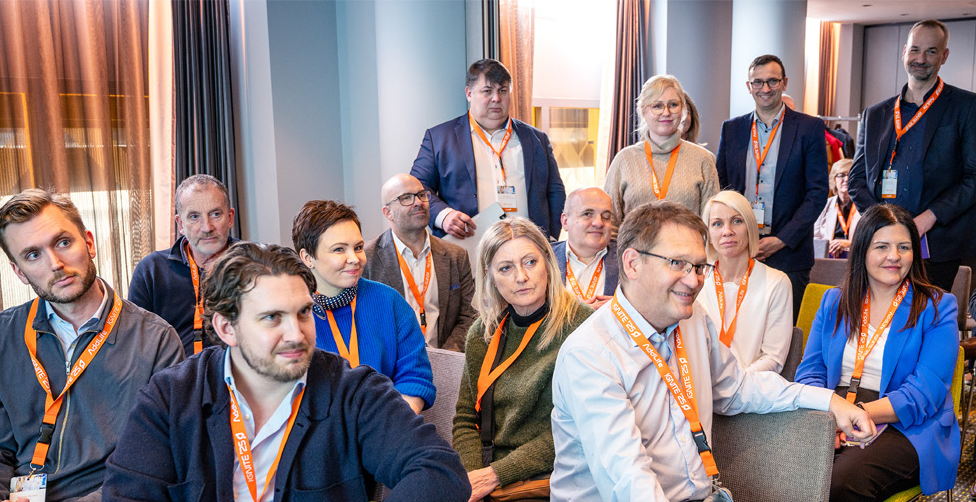
AddLife Academy is the Group’s training academy and a central part of AddLife’s strategy for competence development and corporate culture. Through AddLife Academy, personal and professional development is offered to all employees in the Group. Two trainings – one on the Vision and Corporate Philosophy and one on the Code of Conduct – are mandatory for all employees. In addition, AddLife offers, among other things, training in leadership and sales. The combination of central programmes and local training strengthens AddLife’s common corporate culture and ensures a focus on the Group’s strategic and financial objectives. AddLife Academy is conducted as an ongoing initiative.
HR network
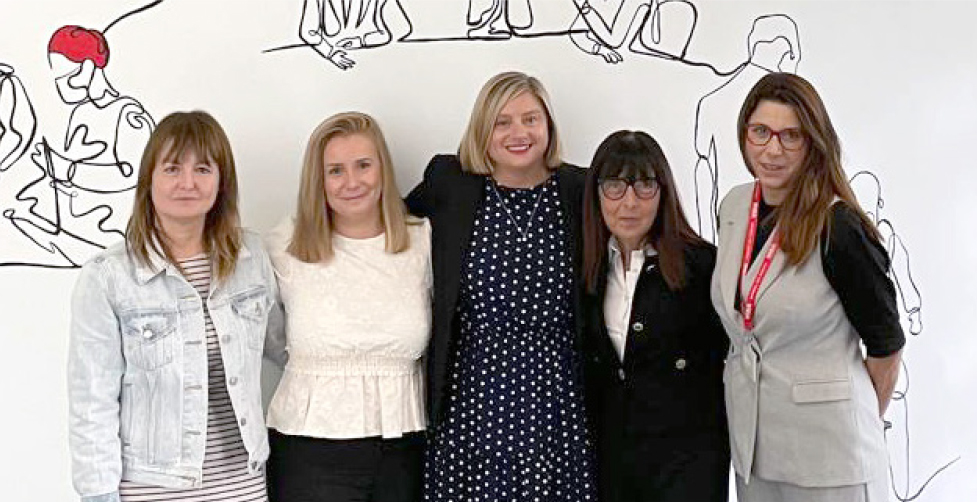
The HR network consists of HR managers from those subsidiaries that have an HR function. The network has met regularly during the year to discuss and collaborate on shared issues. The HR network has developed an HR handbook that serves as AddLife’s practical support for subsidiaries without their own HR function. The HR handbook contains Group‑wide frameworks, guidance and easy‑to‑use tools. Among other things, it describes how subsidiaries can develop their own HR strategy, attract and recruit talent, develop their employees and work with the company’s culture and values. The HR network and the HR handbook are conducted as ongoing initiatives.

Employee well-being
The strategic management to strengthen employee well-being was further developed during the reporting period. AddLife plans to finalise and implement the initiative in 2026 through a number of pilot projects. The purpose of the initiative is to provide the subsidiaries with tools for a more systematic approach to inclusion, anti-discrimination and stress management and thereby contribute to an improved working environment for the Group’s employees.

AddTalent
AddTalent aims to develop and motivate employees to reach their full potential, broaden career paths, strengthen internal succession planning and support career development within the Group. By drawing on the competence that exists across the Group, AddLife aims to ensure that valuable knowledge remains within the company and that more employees are ready to take the next step in their development within the current organisation. AddTalent includes practical guidance on development discussions, performance evaluation and succession planning. AddTalent is conducted as an ongoing initiative.
Metrics and targets
Targets related to the own workforce
S1-5 Targets related to managing material negative impacts, advancing positive impacts, and managing material risks and opportunities
AddLife’s targets related to the Group’s employees have been established to ensure a safe, inclusive and developmental working environment. The targets have been defined at Group level and adopted by the Board of Directors. They have been set with the indirect involvement of employees, based on feedback from the Group’s employee survey and other internal dialogues. Progress against the targets is followed up annually by Group Management and local management teams and forms the basis for local actions.
Strategic objective: Gender equality in Group Management and local management teams
Sustainable Culture
AddLife strives to create an inclusive organisation for the Group’s colleagues, characterised by diversity and inclusion.
Target (2030): Achieve a gender balance between women and men in which neither gender accounts for less than 40 percent or more than 60 percent in total in Group Management and local management teams.
The strategic objective regarding gender equality in Group Management and local management teams relates to AddLife’s potential negative impact on equal treatment and opportunities for all, as well as AddLife’s risk relating to its own workforce. The strategic objective is based on the assessment that a gender-balanced leadership team within the Group contributes to more inclusive leadership and, in turn, a more inclusive organisation. The outcome for the period, comparative figures and the base year are presented under “S1‑9 Diversity metrics”.
Other social objectives
AddLife also monitors a number of additional key performance indicators related to working conditions, the working environment, equal treatment and opportunities in order to evaluate the effectiveness of actions implemented in response to identified material impacts and risks. The overall ambition for these key performance indicators is to maintain or improve performance above a certain level or over time.
AddLife’s employee survey is an important tool for evaluating employees’ experiences and views in relation to a wide range of work-related areas. Among other things, the Group evaluates overall employee satisfaction, which includes, for example, questions on work-related stress, inclusion and competence development. In addition, the proportion of employees who consider AddLife to be an inclusive workplace is evaluated. For the reporting period, the outcome for overall employee satisfaction was 8 on a ten-point scale, and 92 percent of employees considered AddLife to be an inclusive workplace. The key performance indicator for employee satisfaction covers AddLife’s overall impacts and risks related to its own workforce, while the key performance indicator on an inclusive workplace reflects the Group’s potential negative and positive impacts on equal treatment and opportunities for all. In 2025, the method for these key performance indicators was changed due to a new provider for the employee survey, and comparisons with outcomes for previous years are therefore not comparable. For the next reporting period, the Group will develop and adopt a new strategic objective related to employee satisfaction.
Other key performance indicators are integrated into the metrics presented below and include the objectives:
- All employees are to have annual development reviews, which is evaluated through the key performance indicator “Proportion of employees who have had a development review”. The outcome for the period, comparative figures and the base year are presented under “S1‑13 Training and skills development metrics”. This objective relates to AddLife’s potential positive impact on equal treatment and equal opportunities for all.
- There should be no pay gap between women and men, which is evaluated through the key performance indicator “Unadjusted pay gap between women and men”. The outcome for the period, comparative figures and the base year are presented under “S1‑16 Remuneration metrics, pay gaps and total remuneration”. This objective relates to AddLife’s potential negative impact on equal treatment and equal opportunities for all.
- No cases of discrimination are to occur, which is evaluated through the key performance indicator “Number of incidents of discrimination, including harassment”. The outcome for the period, comparative figures and the base year are presented under “S1‑17 Incidents, complaints and severe human rights impacts”. This objective relates to AddLife’s potential negative impact on equal treatment and equal opportunities for all.
All other social objectives relate to AddLife’s risk in relation to its own workforce.
Metrics related to employees
S1-6 Characteristics of the undertaking’s employees
At 31 December 2025, AddLife had 2,382 employees (headcount), of whom 54 percent were men and 46 percent were women. During the reporting period, 384 people left the Group and the employee turnover amounted to 16 percent. Overall, the number of employees decreased slightly compared with the previous year, and the distribution between men and women was unchanged. AddLife’s decentralised operations in the European market mean that the Group has employees in 30 countries. The distribution of employees by country is shown in the table below, where “Other countries” refers to countries in which AddLife has fewer than 50 employees per country. The vast majority of employees are permanent employees, while only a small number are fixed-term employees or employees without guaranteed hours.
| Number of employees (headcount) divided by gender1), 2) | 2025 | 2024 |
|---|---|---|
| Male | 1,294 | 1,323 |
| Female | 1,085 | 1,080 |
| Not reported | 3 | 2 |
| Total employees | 2,382 | 2,405 |
| 1) The information has not been validated by any external party other than within the scope of the statutory limited review. | ||
| 2) Information on employees and employee expenses can be found in Note 7 of the financial information in the annual report. | ||
| Number of employees (headcount) divided by country1), 2) | 2025 | 2024 |
|---|---|---|
| Ireland | 325 | 325 |
| Spain | 296 | 284 |
| Sweden | 285 | 274 |
| Denmark | 246 | 230 |
| United Kingdom | 200 | 219 |
| Norway | 177 | 181 |
| Austria | 135 | 140 |
| Italy | 127 | 127 |
| Finland | 124 | 128 |
| Germany | 123 | 161 |
| Poland | 54 | 55 |
| Switzerland | 51 | 47 |
| Other | 239 | 234 |
| Total number of employees | 2,382 | 2,405 |
| 1) The information has not been validated by any external party other than within the scope of the statutory limited review. | ||
| 2) Information on employees and employee expenses can be found in Note 7 of the financial information in the annual report. | ||
| 2025 | ||||
|---|---|---|---|---|
| Number of employees (headcount) divided by contract1), 2) | Male | Female | Not reported | Total employees |
| Permanent employees | 1,271 | 1,045 | 3 | 2,319 |
| Temporary employees | 22 | 27 | - | 49 |
| Non-guranteed hours employees | 1 | 13 | - | 14 |
| Total employees | 1,294 | 1,085 | 3 | 2,382 |
| 1) The information has not been validated by any external party other than within the scope of the statutory limited review. | ||||
| 2) Information on employees and employee expenses can be found in Note 7 of the financial information in the annual report. | ||||
Metrics related to collective bargaining and social dialogue
S1-8 Collective bargaining coverage and social dialogue
The right of all employees to join a trade union and to bargain collectively is set out in AddLife’s Code of Conduct and, for the Group’s partners, in the Supplier Code of Conduct. At the end of the year, 48 percent of the Group’s employees were covered by collective bargaining agreements, in line with the previous reporting period. The proportion and distribution of employees covered by collective bargaining agreements or other forms of social dialogue by country are presented in the table below.
| 2025 | ||||
| Proportion of employees covered by collective bargaining agreements or social dialogue1), 2) | Collective Bargaining Coverage | Social dialogue | ||
| Coverage | Employees - EEA | Employees - Non-EEA | Workplace representation* | |
| 0-19% | Ireland, Poland | United Kingdom | Denmark, Ireland, Norway, Poland, Spain, Sweden, Austria | |
| 20-39% | Denmark | |||
| 40-59% | Germany | Finland, Italy, Germany | ||
| 60-79% | Finland | Switzerland | ||
| 80-100% | Italy, Spain, Sweden, Austria | |||
| 1) The information has not been validated by any external party other than within the scope of the statutory limited review. | ||||
| 2) The table only includes countries that have at least 50 employees and that represent at least 10 percent of the total number of employees. | ||||
Metrics related to diversity
S1-9 Diversity metrics
AddLife strives to create an inclusive organisation for the Group’s employees, characterised by diversity and inclusion. The charts below present diversity indicators for the age distribution among employees and the distribution of women and men in Group Management and local management teams. The latter constitutes the key performance indicator linked to AddLife’s strategic objective for a sustainable culture. At the end of the year, Group Management and local management teams consisted of 66 percent (65) men and 34 percent (35) women, which is unchanged compared with the previous year but slightly below the gender balance objective. The age distribution of employees at the end of the year was also in line with the previous year, with employees under 30 years accounting for 11 percent (10), employees between 30 and 50 years accounting for 51 percent (52) and employees over 50 years accounting for 38 percent (38).
The information has not been validated by any external party other than within the scope of the statutory limited review.
* In the base year 2022, the distribution was 32 percent women and 68 percent men.
Metrics related to training and skills development
S1-13 Training and skills development metrics
The proportion of employees who have had a development review is essentially unchanged compared with the previous year. The average number of training hours per employee has increased from 6 training hours per employee, partly because the completeness of the reported training data has improved and partly because training has been an explicit focus area in several subsidiaries during the year. Comparative data is only available for the total number of employees for the previous year.
| 2025 | ||||
|---|---|---|---|---|
| Training and skills development1) | Men | Women | Other | Total |
| Share of employees that participated in performance and career development reviews, % 2) | 77 | 76 | - | 77 |
| Average traning hours per employee | 20 | 22 | - | 21 |
| 1) The information has not been validated by any external party other than within the scope of the statutory limited review. | ||||
| 2) Key performance indicator related to AddLife’s objective that all employees should have annual development reviews. In the previous year, the result was 81 percent, and in the base year 2022 the result was 76 percent. | ||||
Metrics related to health and safety
S1-14 Health and safety metrics
Health and safety metrics are essentially unchanged compared with the previous year. The work-related incidents and accidents that have been reported relate to minor physical injuries. Work-related ill health is mainly caused by work-related stress. The increase in the number of lost days is primarily due to a limited number of work-related accidents and cases of work-related ill health involving longer periods of sick leave than in the previous year.
| Health and safety metrics1) | 2025 | 2024 |
|---|---|---|
| Share of employees covered by the company’s occupational health and safety management system based on legal requirements and/or recognised standards or guidelines, % | 94 | 92 |
| Number of fatalities resulting from work-related injuries and work-related ill Health | - | - |
| Number of recordable work-related accidents (excluding fatalities) | 22 | 16 |
| Rate of recordable work-related accidents | 6 | 5 |
| Number of cases of recordable work-related ill health | 10 | 6 |
| Number of days lost due to work-related injuries and fatalities from work-related accidents, work-related ill health and fatalities due to ill health | 834 | 394 |
| 1) The information has not been validated by any external party other than within the scope of the statutory limited review. | ||
Metrics related to work-life balance
Company-specific metric replacing the non-material metric “S1‑15 Metrics on work–life balance” in order to capture the identified material impact relating to perceived work-related stress.
In the Group-wide employee survey, 41 percent of employees state that work-related stress affects them negatively. Of these, a majority report that they are affected to some extent, while a smaller proportion feel that they are affected to a greater extent. Comparative data from the provider that facilitates the employee survey indicates that this level is comparable with other organisations. AddLife regards work-related stress as an important area to follow up as part of its systematic occupational health and safety management.
| Work-life balance1) | 2025 |
|---|---|
| Share of employees who perceive that work-related stress affects them negatively, % | 41 |
| 1) The information has not been validated by any external party other than within the scope of the statutory limited review. | |
Metrics related to unadjusted pay gap and annual compensation ratio
S1-16 Remuneration metrics, pay gap and total remuneration
The unadjusted pay gap between women and men has increased slightly compared with the previous year, mainly due to changes in the employee composition in a few subsidiaries. The annual compensation ratio is reported for the first time and there is therefore no comparative data for the previous year.
| Remuneration metrics1) | 2025 | 2024 |
|---|---|---|
| Unadjusted pay gap between women and men, %2) | 12 | 103) |
| Annual compensation ratio | 19 | - |
| 1) The information has not been validated by any external party other than within the scope of the statutory limited review. | ||
| 2) Key performance indicators related to AddLife’s objective that there should be no pay gap between women and men. In the base year 2022, the outcome was 14 percent. | ||
| 3) Comparative figures for 2024 have been adjusted by -1 percentage point for the unadjusted pay gap due to an updated methodology. | ||
Metrics related to reported human rights complaints
S1-17 Incidents, complaints and severe human rights impacts
The number of reported complaints related to human rights has increased during the year. This increase is primarily assessed to reflect greater awareness of and confidence in the Group’s whistleblowing channel and other reporting channels, rather than an actual increase in incidents. No complaints have been reported to national contact points, no complaints have concerned serious human rights violations, and no fines or compensation have been paid during the year in relation to incidents and complaints regarding human rights.
| Incidents, complaints and severe human rights impacts1) | 2025 | 2024 |
|---|---|---|
| Number of incidents of discrimination, including harassment2) | 3 | - |
| Number of complaints submitted through channels for employees to raise concerns (including whistleblowing mechanisms) | 13 | 2 |
| Number of complaints submitted through channels for employees to raise concerns (including whistleblowing mechanisms) to the National Contact Points for the OECD Guidelines for Multinational Enterprises | - | - |
| Fines, penalties and compensation for damages resulting from incidents and complaints, SEK | - | - |
| Number of severe human rights incidents related to the company’s employees | - | - |
| Fines, penalties and compensation for damages resulting from severe human rights incidents, SEK | - | - |
| 1) The information has not been validated by any external party other than within the scope of the statutory limited review. | ||
| 2) Key performance indicators related to AddLife’s objective that no cases of discrimination are to occur. In the base year 2022, the outcome was 4 cases. | ||
Method and definitions
All data on the Group’s employees is collected from local ERP or HR systems and from the Group-wide employee survey.
Number of employees (headcount)
The number of individuals, including full-time and part-time employees, at the end of the reporting period.
Rate of recordable work-related accidents
The number of injuries in relation to the total number of hours worked during the reporting period. Includes the Group’s own workforce and is reported as the number of injuries per one million hours worked.
Average traning hours per employee
Total number of completed training hours during the reporting period divided by the number of employees (headcount). The total number of training hours includes internal training hours through AddLife Academy as well as other external training hours reported by each subsidiary.
Share of employees that participated in performance and career development Reviews
Share of employees who have been employed for at least 12 months and who answered yes to the question “Have you had a development review in the past 12 months?” in the employee survey.
Share of employees who perceive that work-related stress affects them negatively
The share of employees who to some extent disagree with the statement “I am free from work-related stress that affects me negatively” in the employee survey.
Unadjusted pay gap between women and men
The difference in average gross hourly pay between women and men, expressed as a percentage of men’s average gross hourly pay. The gross hourly pay is calculated per individual for the reporting period and includes fixed and variable remuneration converted into an hourly rate. All hourly pay is reported in each country’s local currency, which is converted into SEK using the average exchange rate for the period, before the pay gap is calculated per subsidiary. Finally, each subsidiary’s pay gap is weighted based on its share of the Group’s total number of employees.
Annual compensation ratio
The ratio between the total annual remuneration of AddLife’s highest-paid individual and the median of the total annual remuneration for the Group’s employees, excluding the highest-paid individual. Total annual remuneration includes fixed and variable remuneration. Each subsidiary reports the median of total annual remuneration in local currency, which is converted into SEK using the average exchange rate for the period. The Group’s median is determined by sorting the subsidiaries’ reported median remuneration from lowest to highest and accumulating the number of employees (headcount) until the middle employee is reached, thereby identifying the company whose reported remuneration corresponds to the Group’s median.
Employee turnover
Number of terminated employments during the reporting period divided by the average number of employees (headcount). The average number of employees is calculated as the sum of the number of employees (headcount) at the beginning and at the end of the period, divided by two.