

MARKET
Strong position in a changing, growing Life Science market
AddLife is a leading partner in Life Science with a strong presence in large parts of Europe. With a decentralised business model focused on fast‑growing and profitable niches and a strong focus on customer proximity and value‑creating offerings, AddLife’s companies can adapt to and capitalise on prevailing market trends.
AddLife is well positioned to benefit from a market characterised by growing healthcare needs, longer waiting lists and increasing use of new technology. The need to perform more procedures is rising, while the shortage of healthcare professionals persists.
This development is driving demand for time‑ and resource‑efficient products and services, advanced instruments and fit‑for‑purpose consumables. Within the framework of its strategy, AddLife has identified a number of priority growth segments that are expected to contribute significantly to earnings growth.
The European Medtech market amounts to just over EUR 150 billion. This market is growing by around 5 percent per year. The diagnostics market amounts to approximately EUR 13 billion and is growing by 2–3 percent annually. Both markets are relatively insensitive to economic fluctuations. Source: Medtech Europe
The market is fragmented and consists of roughly 38,000 companies, 90 percent of which are small and medium‑sized enterprises. Germany, France, the UK, Italy and Spain are the five largest regional markets. In Europe, an average of 10 percent of GDP is spent on healthcare, of which almost 8 percent goes to medical technology products. Source: Medtech Europe
A common feature of the markets where AddLife’s companies operate is that a large share of healthcare is publicly financed and a significant proportion of business is conducted through public procurement. Tenders are increasing in scope and often have long contract periods. There is a clear trend away from purely price‑based tenders towards models that also value sustainability – particularly in Northern and Western Europe – and the quality of service and support.
The clinical needs and products of healthcare are broadly similar worldwide, but regulatory requirements, healthcare structures and reimbursement systems, procurement practices, clinical practice and patient preferences vary significantly between countries and regions. In addition, service and clinical support are becoming increasingly important in enabling advanced treatments. As a result, customer proximity, service, flexibility and a strong anchoring in the local market are key characteristics for suppliers to healthcare.
AddLife’s presence in 30 European markets has strengthened both new and existing supplier relationships, expanded the Group’s network and enabled sales of both proprietary and distributed products in new markets. AddLife’s sales are relatively evenly distributed across several European markets, which reduces exposure to local market fluctuations. Following major acquisitions in 2021 and 2022, Ireland, the UK and Spain are among AddLife’s largest and fastest‑growing markets.

Overall trends and drivers
Several trends and drivers are shaping the European Life Science market. These reflect both long‑term structural and more recent factors affecting the sector and its suppliers, and they require deep customer and technology understanding as well as flexibility and adaptability. AddLife’s decentralised business model makes it possible to quickly adapt to and benefit from these trends.
Ageing population
The ageing population is a decisive factor; over the next 25 years, the share of the EU population aged 80 or older is expected to increase sharply from the current 6 percent to 11 percent (Eurostat). This age group are major users of healthcare, care and diagnostics. Healthcare costs per capita accelerate from the age of 55–60 and reach their highest levels around 80–85, remaining high thereafter.
At the same time, the share of people with chronic diseases is increasing, which means that a generally older population lives longer with one or more chronic conditions. This creates long‑term demand for healthcare products, services and solutions that support more efficient care for an ageing population.
Note: Includes AddLife’s markets in Europe and Australia.
Economic factors
Healthcare in Europe is largely tax‑financed, and needs are constantly growing. Healthcare is a high‑priority societal issue, which provides a degree of protection against budget cuts, even in times of economic austerity.
This stable growth can be seen by analysing GDP growth in relation to healthcare expenditure over time in the markets where AddLife operates. This shows that AddLife is active in a market where demand is growing steadily and is relatively independent of economic cycles (OECD, WHO, European Central Bank).
Regulations
The market is characterised by strict regulation that applies to all players, whether private or public. This creates caution and some inertia, but also stability and predictability.
Suppliers face stringent requirements related to product quality, certifications, procurement criteria, regulatory compliance and monitoring, which create high barriers to entry for new players. New EU regulations for medical devices (MDR) and for in vitro diagnostic products (IVDR) are being implemented in the industry, although the transition period has been extended until 31 December 2027/28/29, depending on classification.
The new regulations will in many cases require renewed and more complex testing for CE certification. At the end of 2025, the European Commission presented proposals to simplify these regulations somewhat, with the aim of ensuring faster processes and lower cost burdens for smaller companies. In addition, new sustainability requirements are being introduced on an ongoing basis, with some variation in implementation between markets.
This is a costly and burdensome process for smaller players with limited resources, which benefits companies that are part of a larger corporate group. It also leads to larger non‑European suppliers increasingly seeking strong local partners who can support them in this work.
Technological development
AddLife benefits from three rapidly growing technological areas:
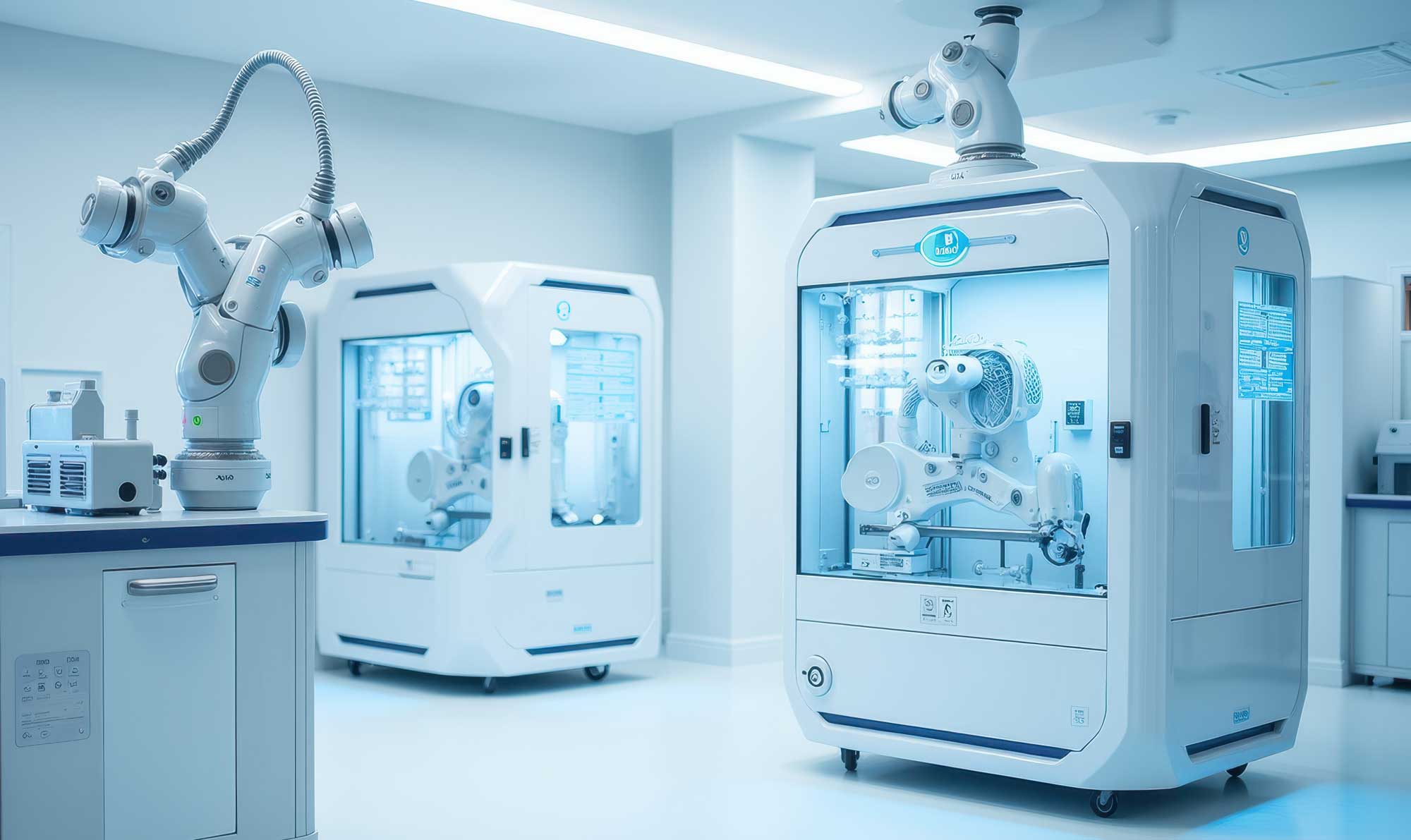
1. Next Generation Sequencing
NGS has long been established in research and is now expanding rapidly in diagnostics as well. AddLife has a competitive offering in NGS and has long‑standing partnerships with several leading suppliers. The market is expected to grow by around 15 percent per year (Source: Market Data Forecaster), enabling AddLife to further strengthen its position by expanding its supplier network or through strategic acquisitions.

2. Robotic surgery
Robotic surgery is a dynamic and fast‑growing segment with a market size in Europe of USD 1.8 billion (2024) and an annual growth rate of 16 percent (Global Market Insights), driven by technological advances that improve clinical outcomes and reduce the need for healthcare personnel. In 2025, AddLife developed a strong offering in this area by partnering with seven leading suppliers of robotic systems across six of its key markets. The company is well positioned to deliver this advanced technology to its customers and to meet the growing demand for innovative surgical solutions.

3. Artificial intelligence
AI has significant potential across the healthcare sector, contributing to improved diagnostic accuracy and increased efficiency. AddLife already offers several AI‑based solutions, including digital pathology and digital monitoring services. Through strong customer relationships, deep understanding of procurement processes and a unique combination of software, products and services, AddLife is well positioned to further broaden its AI offering.

Competitive landscape creating opportunities
AddLife operates in a dynamic market with players that are competitors, suppliers or potential acquisition targets, often with overlapping roles.
The market is undergoing change, including restructuring among global manufacturers, shifts in go‑to‑market strategies and changes in ownership among multinational distribution groups. In various ways, this has created favourable conditions for AddLife’s future organic and acquisition‑driven growth.
PROFILE
GLOBAL PRODUCT COMPANIES
MULTINATIONAL DISTRIBUTORS
SMALLER LOCAL DISTRIBUTORS
DESCRIPTION
- Develop and manufacture products
- Mixed go‑to‑market strategy – direct and distribution
- Acquisitions as part of growth strategy
- None with full European coverage or a combined Medtech/Labtech offering
- Large number of local distributors
- Often owner‑managed companies
RELATIONSHIP
COMPETITOR AND/OR SUPPLIER
COMPETITOR
(AddLife’s profile group)
COMPETITOR / POTENTIAL ACQUISITION TARGET
ONGOING TRENDS
- Focus shifting to core portfolios, profitability instead of market share
- Updating go‑to‑market strategies
- Ambition to expand into higher‑margin segments
- Ownership changes expected
- Capital requirements
- Regulatory environment
- Constraints in succession, talent and business development
OPPORTUNITIES FOR ADDLIFE
- Gain market share
- New product portfolios
- Gain market share from distracted competitors
- Gain market share
- Potential for acquisitions
Global factors
The local market is highly dependent on international product development and manufacturing, which makes it vulnerable to global disruptions. Rising geopolitical tensions and ongoing wars and conflicts, such as Russia’s invasion of Ukraine and the war in the Middle East, are affecting the prevailing conditions. Protectionist trade measures, new trade tariffs and disruptions in international transport can also significantly affect the availability of raw materials and products, delivery reliability and cost levels in Europe.
With operations mainly in Europe, AddLife is well positioned to manage developments in global trade, which are expected to remain a source of uncertainty in 2026 and beyond. In addition, AddLife’s strategy of regional sourcing, diversified supplier relationships and close cooperation with local customers helps to mitigate the risks arising from global disruptions.
Majority of supplier relationships in Europe
AddLife is well positioned, with more than 95 percent of its sales in Europe. Over 80 percent of products are sourced from European suppliers, less than 10 percent from North America and less than 5 percent from China.
Staff shortages in healthcare
There is a shortage of labour in the healthcare sector throughout Europe. This need is expected to increase with an ageing population and a higher prevalence of chronic diseases. The challenge is exacerbated by an ageing workforce, while competency requirements, particularly in digital skills, are rising. This results in capacity constraints in healthcare, increasing the need for process and resource efficiency.
AddLife offers a broad range of products that meet healthcare’s need for more efficient patient care. Staff shortages have led to greater demand for our resource‑efficient and advanced technological solutions, such as minimally invasive surgery, which strengthen our position in the market.

Trends in Medtech
ELECTIVE SURGERY
The long‑term effects of the pandemic are still evident in Europe, where waiting lists have continued to grow and recovery is slow. Some countries have taken measures such as increased funding and staffing to reduce the treatment backlog, including a greater openness to new technologies and expanded use of private care providers and digital visits.

An increased number of surgical procedures will be needed over a long period. Through its broad portfolio and strong service offering in elective surgery, AddLife has actively contributed to reducing the patient waiting lists. New technology enables shorter procedures, reduced staffing requirements and shorter post‑operative care. AddLife’s decentralised business model and proximity to customers have made flexible sales possible, allowing the group to gain market share from competitors.
CIRCULAR BUSINESS MODELS
Interest in circular business models is growing, particularly in the assistive devices sector, where products that can be refurbished and reused are increasingly in demand. While this can reduce some new sales, it also creates room for new business models.
AddLife is supporting and driving this development by offering services such as maintenance, refurbishment and sterilisation of assistive devices in Ireland, as well as rental of equipment to hospitals and private homes. AddLife is actively exploring opportunities to broaden its range of reusable products and to develop new, circular business models.
HOME CARE
Demographic trends, rising healthcare costs, staff shortages and changing preferences are driving the trend for older people with care needs to remain in their homes for longer. To make this possible, home adaptations and assistive devices are needed, as well as increased use of digital solutions.
AddLife contributes by offering welfare technology in several Nordic markets, including innovative solutions such as Hepro’s “Nattugla” (Night Owl), a digital monitoring service that uses anonymisation functions and AI for continuous learning and prevention.
Trends in Labtech
GROWING APPLICATION AREAS FOR DIAGNOSTICS
Market expansion is being driven by technological advances that facilitate the development of more advanced, specific, rapid and cost‑efficient test methods. One example is precision medicine, where genetic tests identify a specific genetic marker to determine which treatment will be most effective for an individual patient. Another example is rapid tests for increasingly widespread antibiotic resistance.
AddLife is actively contributing to this development by offering products, advice and services in advanced diagnostics. AddLife also plays an important role in supporting the transition of new technologies from research use to clinical diagnostics. In recent years, collaborations with existing suppliers have been expanded to new markets, for example in areas such as Next Generation Sequencing (NGS) in gene technology and diagnostics for sepsis.
DECENTRALISATION IN DIAGNOSTICS
The pandemic years have accelerated the development of smaller and easier‑to‑use diagnostic instruments that maintain laboratory‑level quality at lower cost and with higher availability. These instruments, which are often used in Point‑of‑Care settings, are now reaching new customer groups such as hospital wards and pharmacies. Demand has also increased for multi‑parameter instruments that enable multiple tests from a single sample.
AddLife has established itself as an expert in this area, with successful partnerships in, among other places, Sweden, Norway and Finland, and continues to explore new opportunities to meet customer needs.
OUTSOURCING IN BIOTECH AND PHARMA
The increased pace of growth in drug development has led to greater demand for outsourcing, particularly among smaller, innovative biotech companies that rely on external service and analysis providers. This has resulted in an expansion of both existing and new services in this area.
AddLife currently offers extensive application support and development of analytical methods to this customer segment and is continuously evaluating new opportunities to further develop its service offering.
DIGITAL SALES CHANNELS IN RESEARCH
An increasing share of non‑European suppliers in the research segment are offering non‑exclusive distribution agreements. This is driving a growing share of digital sales, both from manufacturers selling directly to customers and from distributors operating across multiple geographic markets.
AddLife has several companies with offerings in this area, where the majority of sales are conducted digitally. Additional companies in the Group are evaluating opportunities to expand these services within their respective customer groups and segments.
Priority segments for AddLife
In its strategy, AddLife has identified a number of priority segments in the portfolio, based on higher potential for both organic and acquisition‑driven growth. Average growth in the selected segments is strong, with Labtech segments growing by 9.5 percent and Medtech segments growing by 7.5 percent, both exceeding the industry average.
| Prioritised segment | Expected margins, % | Addressable market (USDm)¹ | Market CAGR 2023 - 2028, % | Description & rationale |
|---|---|---|---|---|
| DIAGNOSTICS | ||||
| Microbiology | >12 | 1,300 | 8.2 | New technologies are appearing, e.g. nanotechnology used to develop biosensors, metagenomics or rapid PCR |
| Immunology | >12 | 35,400 | 7.7 | Growing segments, e.g., allergy, autoimmunity & infection serology |
| Cytology & pathology | >12 | 5,300 | 13.6 | Digital pathology is the key driver for segment expansion |
| POC (Point of Care) | 10-12 | 15,200 | 10.2 | New technologies are appearing and new markets opening towards PoC |
| Molecular diagnostics & genetic testing | >12 | 5,300 | 10.4 | Growing market with new technology and fragmented competition |
| BIOMEDICAL & RESEARCH | ||||
| Molecular biology | >12 | 6,200 | 13.3 | New technologies are market drivers, e.g. single-cell sequencing or CRISPR-Cas9 technology |
| Cell biology & culturing | 10-12 | 9,300 | 11.8 | Biotech research is growing |
| Advanced instruments for laboratory analysis | 10-12 | 22,800 | 8.7 | Advanced niche applications which often support sales of reagents (instrument values >10 KEUR) |
| HOSPITAL | ||||
| Surgery | >10 | 4,600 | 8.2 | High demand, interesting sub-segments, e.g., ENT (own products) or bariatric surgery |
| Orthopaedic Surgery | >10 | 9,200 | 4.2 | High margins and growth, opportunities for geographical expansion |
| Interventional radiology | >10 | 8,000 | 5.3 | Part of fast-growing minimal invasive surgery |
| Endoscopy | >10 | 9,700 | 6.7 | Part of fast-growing minimal invasive surgery |
| Ophthalmology | >10 | 20,600 | 4.3 | Growing demand, unique AddLife platform |
| Hospital Consumables | 8-10 | 103,400 | 8.4 | Opportunities with own products in existing channels, adding stable volumes to business |
| HOMECARE | ||||
| Home adaptation | >12 | 1,400 | 11.6 | Growing initiatives for people to stay longer at home before they move to a care home |
| Welfare technology | 8-10 | 3,600 | 11.8² | New digital technologies, high growth and potential in selected geographical markets |
| Technical aids | >12 | 4,400³ | 9.9⁴ | Advanced technical aids for disabled people as well as for the elderly population is a growing market |
| Markets: Europe and Australia. Welfare technology only in Europe. 2021–2027. | ||||
| Source: Market Data Forecast, Berg Insight, Next MSC, AddLife analysis. | ||||
| ¹Europe and Australia. ²Forecast period 2021–2027. ³Only Europe, data from 2024. ⁴2024–2029. | ||||